

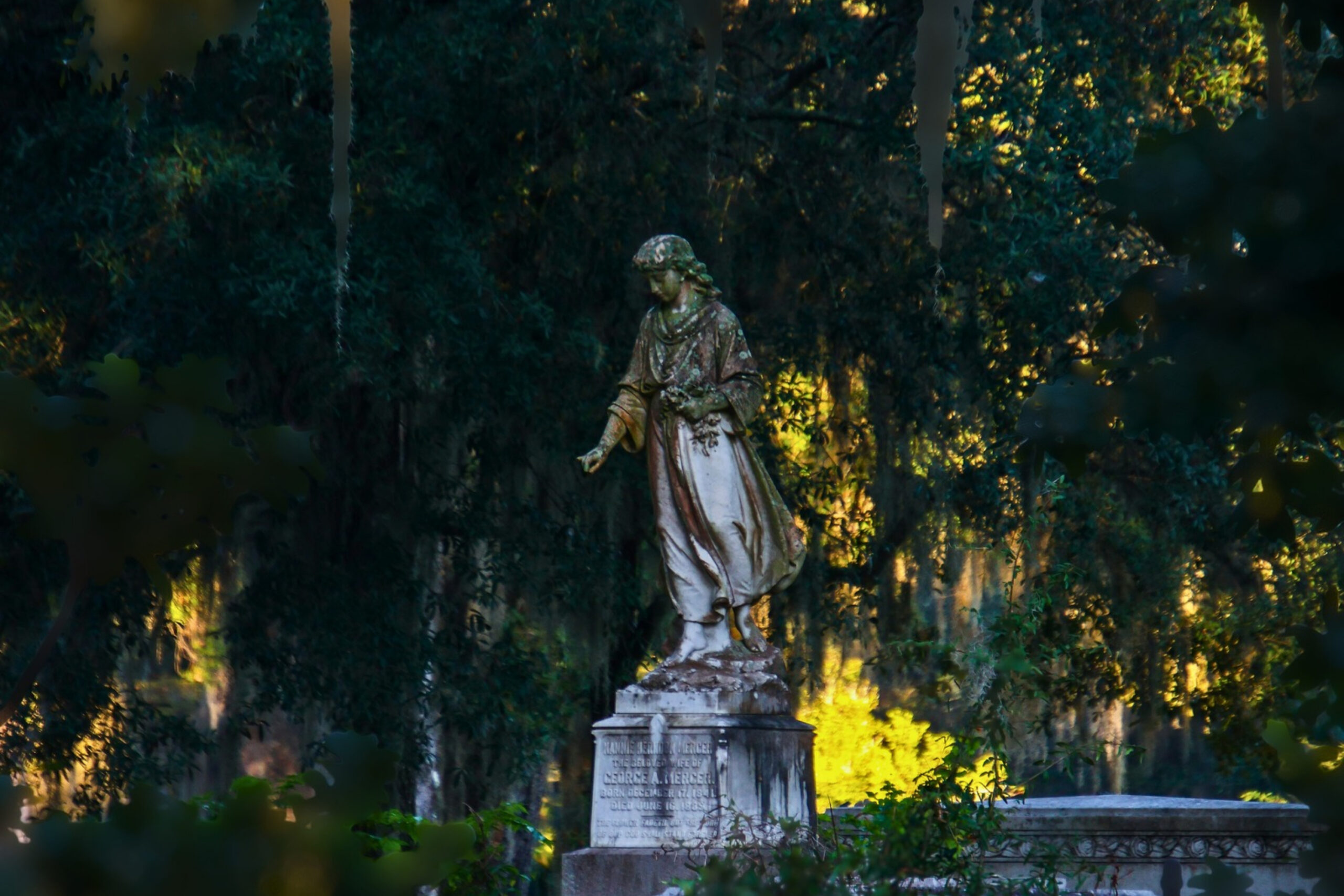
The live oaks catch your attention before you’ve read a single name. Spanish moss hangs above the lanes, sunlight falls across carved stone, and another monument comes into view each time you turn. Walk a little farther, and the setting begins to feel as memorable as the individual graves.
If you’re researching Bonaventure Cemetery Park, you’ll find it officially listed as Bonaventure Cemetery. This historic burial ground beside the Wilmington River offers a quieter way to explore Savannah’s history through sculpture, family memorials, and the stories of people buried here. It remains an active cemetery, so a visit calls for curiosity and care. Read on below to know more about this treasured Savannah attraction.
Quick Summary: Bonaventure Cemetery Park, officially Bonaventure Cemetery, is at 330 Bonaventure Road, east of Savannah’s Historic District. The cemetery is open to the public daily from 8 AM to 5 PM, with free general admission. Allow around 1–2 hours to explore its oak-lined lanes, historic monuments, and memorials to figures such as Johnny Mercer and Gracie Watson. You can visit independently or join a guided tour; the Bonaventure Historical Society offers free tours on scheduled dates, with tickets required. Personal photography is permitted from public pathways. Bird Girl is no longer in the cemetery and is displayed at Telfair Academy. Respect private burial plots, funeral services, and families visiting loved ones.
Table of Contents
- A Quieter Side of Savannah Beneath the Live Oaks
- The History Behind Bonaventure’s Landscape
- Memorials and Stories Worth Pausing For
- Explore Independently or Join a Guided Tour
- Bonaventure Cemetery Through Your Lens
- A Few Things to Know Before Your Visit
- Visiting With Care
- Find Your Savannah Home Base With Mighty Tree Properties
- Bonaventure Cemetery Park FAQ
A Quieter Side of Savannah Beneath the Live Oaks
Bonaventure rewards looking closely. From a distance, you notice the oak branches and rows of headstones; closer to the path, carved flowers, lettering, and sculpted figures begin to stand out. Some visitors come with particular graves in mind, while others spend most of their time following the lanes and studying the stonework.
The cemetery occupies a bluff beside the Wilmington River. Its waterfront setting adds another dimension to the visit, although you won’t see the river from every section. Leave time to appreciate the landscape rather than moving directly between the best-known memorials.
You may also encounter people whose visit has nothing to do with sightseeing. Give them space, keep conversations quiet, and change direction if a service is underway. That consideration belongs throughout the visit, not just at the entrance.
The History Behind Bonaventure’s Landscape
The grounds were once part of Bonaventure Plantation before the property was purchased for a private cemetery in 1846. It became a municipal cemetery in 1907. That history predates the monuments visitors come to see today, and the plantation origins deserve acknowledgment alongside the later landscape and memorial art.
Walking here offers a different perspective from touring Savannah’s historic houses. Family names repeat across generations, inscriptions record relationships, and monuments reveal how people chose to remember their dead. You don’t need to recognize every name to find those details moving.
Memorials and Stories Worth Pausing For
Gracie Watson’s Marble Portrait
The story behind the marble figure is a short, sad one: Gracie Watson lost her life to pneumonia in 1889, at just six years old.. Sculptor John Walz created her memorial from a photograph, giving the figure a distinctly personal quality. Knowing that background changes the experience of looking at it: this is a family’s remembrance of a child.
View the sculpture from the public pathway outside the enclosure. Gracie’s story has attracted folklore over the years, but the documented account is compelling without embellishment. For families visiting with children, it can also prompt thoughtful questions about why people create memorials.
Corinne Lawton’s Sculpted Memorial
Corinne Elliott Lawton’s memorial gives you another reason to pause among the Lawton family graves. Italian sculptor Benedetto Civiletti created her marble likeness in Palermo in 1879, two years after her death. The figure rests beside a cross, with an upward gaze and carefully carved folds of clothing that reward a closer look from the pathway.
Her story has gathered dramatic legends, but accounts drawing on her mother’s diary describe an illness and a family grieving at her bedside. You don’t need a tale of forbidden romance to appreciate the memorial. Take a moment to notice its expression and craftsmanship, remembering that the sculpture was commissioned to preserve someone’s likeness.
Johnny Mercer and Savannah’s Musical History
Johnny Mercer’s gravesite connects Bonaventure with American songwriting. The Savannah-born lyricist helped create songs familiar to generations of listeners, including “Moon River.” His name gives music lovers a recognizable starting point among the cemetery’s many family plots.
You don’t have to know his entire career to appreciate the stop. A guide can explain his Savannah connections, while an independent visit leaves time to read and reflect. Keep the moment quiet rather than playing music aloud beside the graves.
The Details Between the Famous Graves
Some of the most absorbing parts of Bonaventure are the memorials you didn’t come looking for. The Lawton family plots contain elaborate marble carvings, while other stones catch the eye through a single figure, a worn inscription, or carefully worked decoration.
Look from the pathways and give yourself permission to linger. A visit becomes more personal when you notice what interests you instead of measuring progress by famous names. There is more here than a short list of stops can capture.
Explore Independently or Join a Guided Tour
A self-guided visit works well if you prefer to stop for photographs or spend longer around particular sections. Use the city’s cemetery map to choose a manageable route rather than trying to cover the entire grounds. With more than 100 acres, Bonaventure is larger than a quick glance at an entrance map might suggest.
For more background, consider a tour with the Bonaventure Historical Society (BHS). Its trained guides connect monuments with the people and events behind them. Hearing those stories can help visitors notice details they might otherwise walk past.
BHS offers free guided tours on scheduled second-weekend dates, with free tickets required because space is limited. Check the society’s current tour schedule when choosing your visit. Private tour companies provide additional options if the volunteer schedule doesn’t fit your trip.
Bonaventure Cemetery Through Your Lens
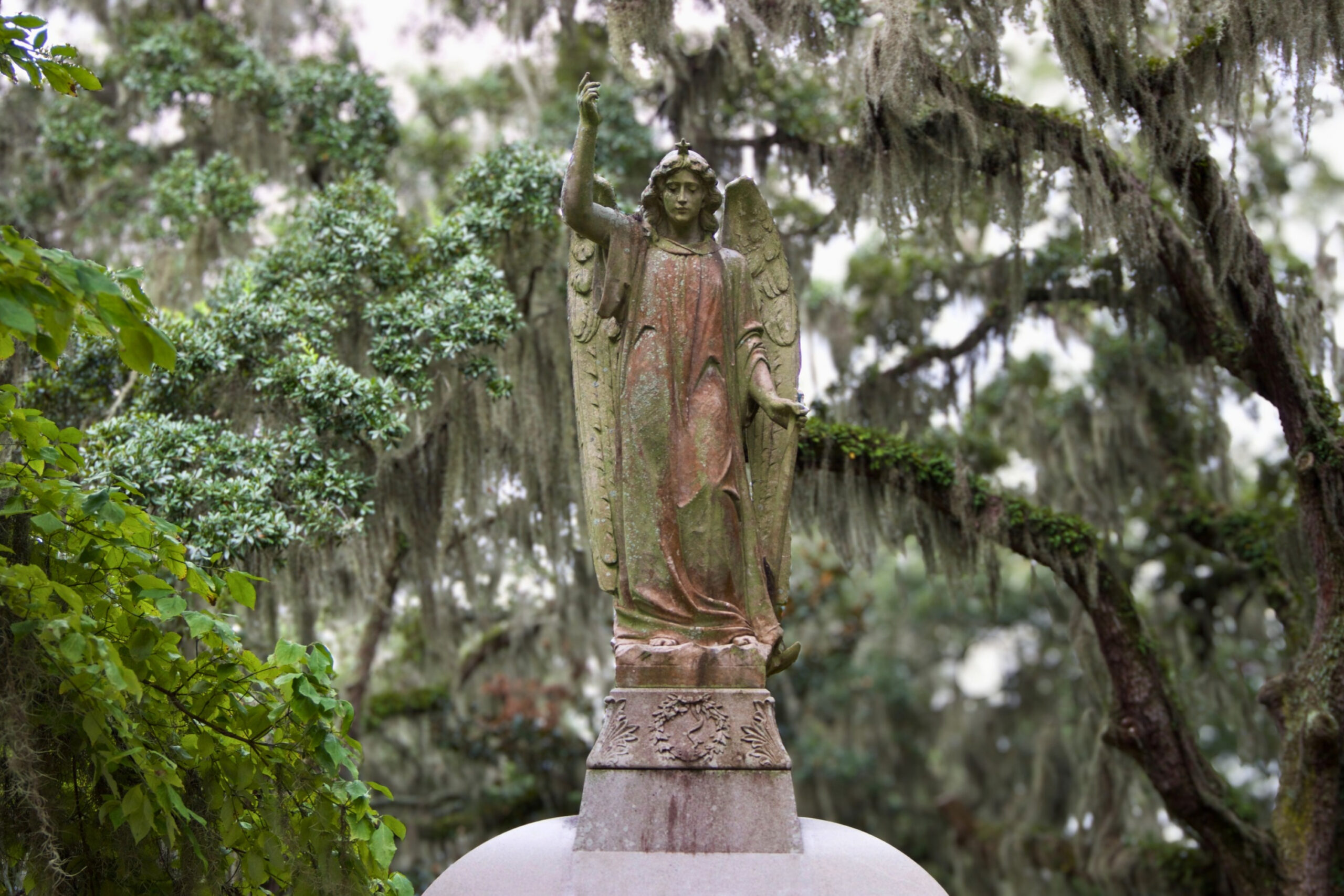
The oak-lined lanes offer plenty to photograph without entering a burial plot. Try framing a view beneath the branches or looking for the contrast between pale stone and dark foliage. Stay on public pathways, use your camera’s zoom for details, and avoid including mourners in your photographs.
Spring flowers can bring color to the grounds, while summer’s greenery deepens the shade beneath the trees. Savannah’s humidity still makes warm-weather visits tiring, especially when you stop often outdoors. Fall and winter can offer more comfortable walking days, though the weather and light vary.
Personal photography is permitted, but organized shoots, commercial filming, and publication may require permission. Review the city’s photography guidance before arranging anything beyond personal sightseeing photographs. A memorial should never become a seat or prop for a picture.
One famous photograph also causes confusion: the Bird Girl statue associated with the cover of Midnight in the Garden of Good and Evil is no longer here. It is displayed at Telfair Academy. Bonaventure remains part of that story, but you won’t find the original statue among its graves.
A Few Things to Know Before Your Visit
You don’t need an elaborate itinerary to enjoy Bonaventure Cemetery Park. A map, comfortable shoes, and enough time to walk without rushing will take you further than trying to see every section.
- Head to 330 Bonaventure Road. Public visiting hours are 8 AM–5 PM daily; check the official city page for updates.
- Allow around 1–2 hours for a first visit, adjusting for your walking pace and any tour.
- Bring water and wear shoes suited to uneven surfaces. Don’t assume every section offers the same footing or accessibility.
- Park in designated areas and leave cemetery roads clear for other vehicles and funeral traffic.
- With children, choose a shorter route and explain beforehand that this is a place for quiet walking.
Visiting With Care
Bonaventure’s beauty draws visitors, but the graves remain deeply personal places for the families connected to them. These simple guidelines help keep sightseeing considerate.
- Stay on public pathways. Burial plots are private areas, even when a monument looks close enough to approach.
- Give funerals and visiting families plenty of room. Take another lane rather than walking through a gathering.
- Leave the monuments untouched. Don’t climb on them, sit on stonework, or cause damage of any kind.
- Keep children nearby and voices low. Save running and active games for another setting.
- Follow posted instructions and contact the cemetery office about organized photography or other special activities.
Find Your Savannah Home Base With Mighty Tree Properties
Still choosing somewhere to stay? Explore Savannah luxury vacation rentals with Mighty Tree Properties for a comfortable home base near the Historic District and other celebrated Savannah attractions. Choose a home with space for your family to gather between outings, then make time for Bonaventure’s history and scenery. Browse available dates, or contact us with questions about finding the right accommodation.
Bonaventure Cemetery FAQ
Is Bonaventure Cemetery free to visit?
Yes, general admission is free; private guided tours may charge separately.
What are Bonaventure Cemetery’s opening hours?
Public visiting hours are 8 AM–5 PM daily, subject to any announced closures or changes.
How long should you spend at Bonaventure Cemetery?
Allow around 1–2 hours for a first visit, with more time if you want to explore additional sections or take photographs.
Can you explore without a tour guide?
Yes, you can visit independently during public hours and use the city’s cemetery map to plan your route.
Can you take photographs at Bonaventure Cemetery?
Yes, personal photographs are permitted from public pathways; check city requirements for organized shoots, commercial use, or publication.
Is Bonaventure Cemetery suitable for children?
Yes, children are welcome when supervised and prepared for a quiet, respectful visit to an active cemetery.
Is the Bird Girl statue still at Bonaventure Cemetery?
No, the original Bird Girl statue is displayed at Telfair Academy, not in Bonaventure Cemetery.